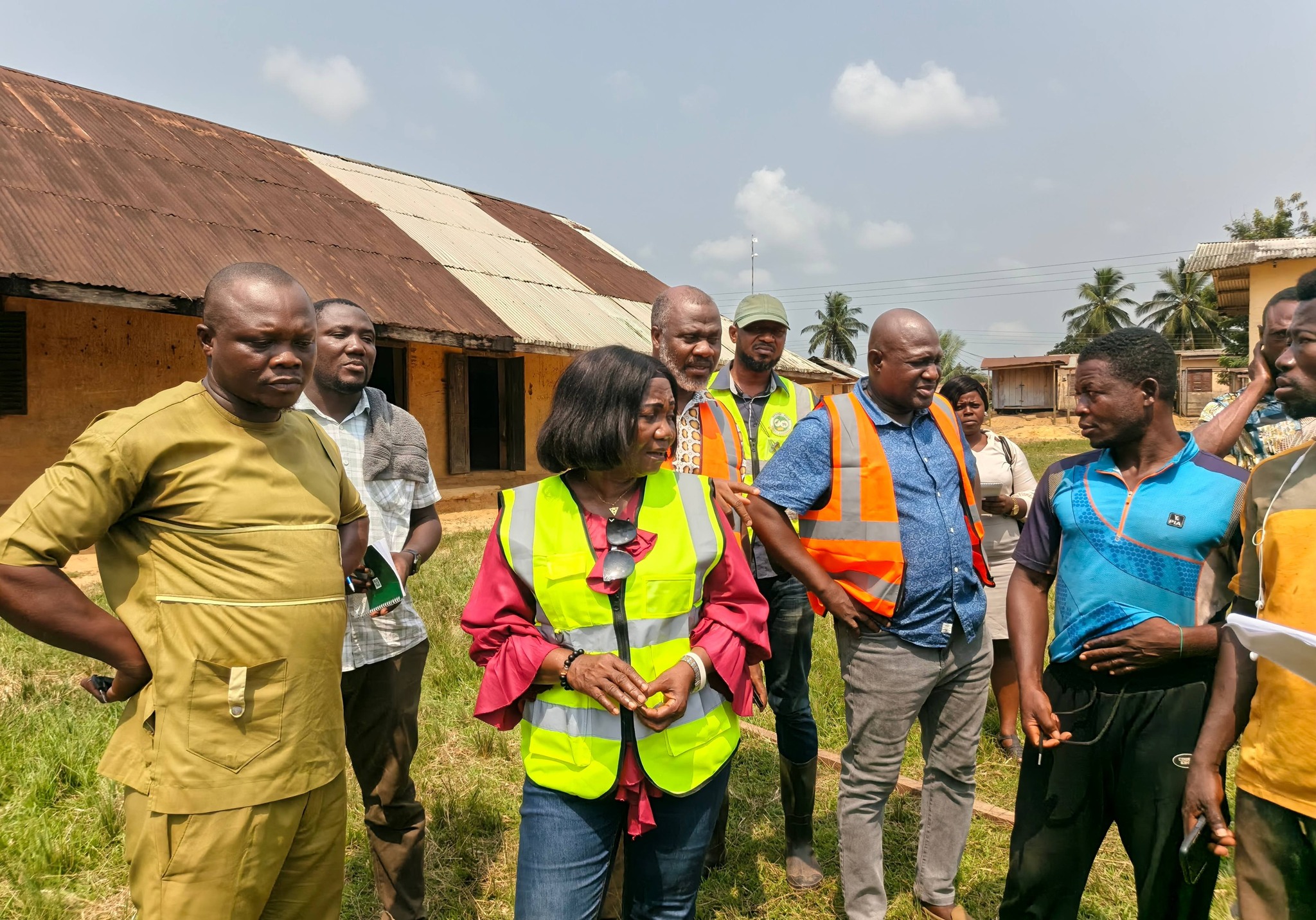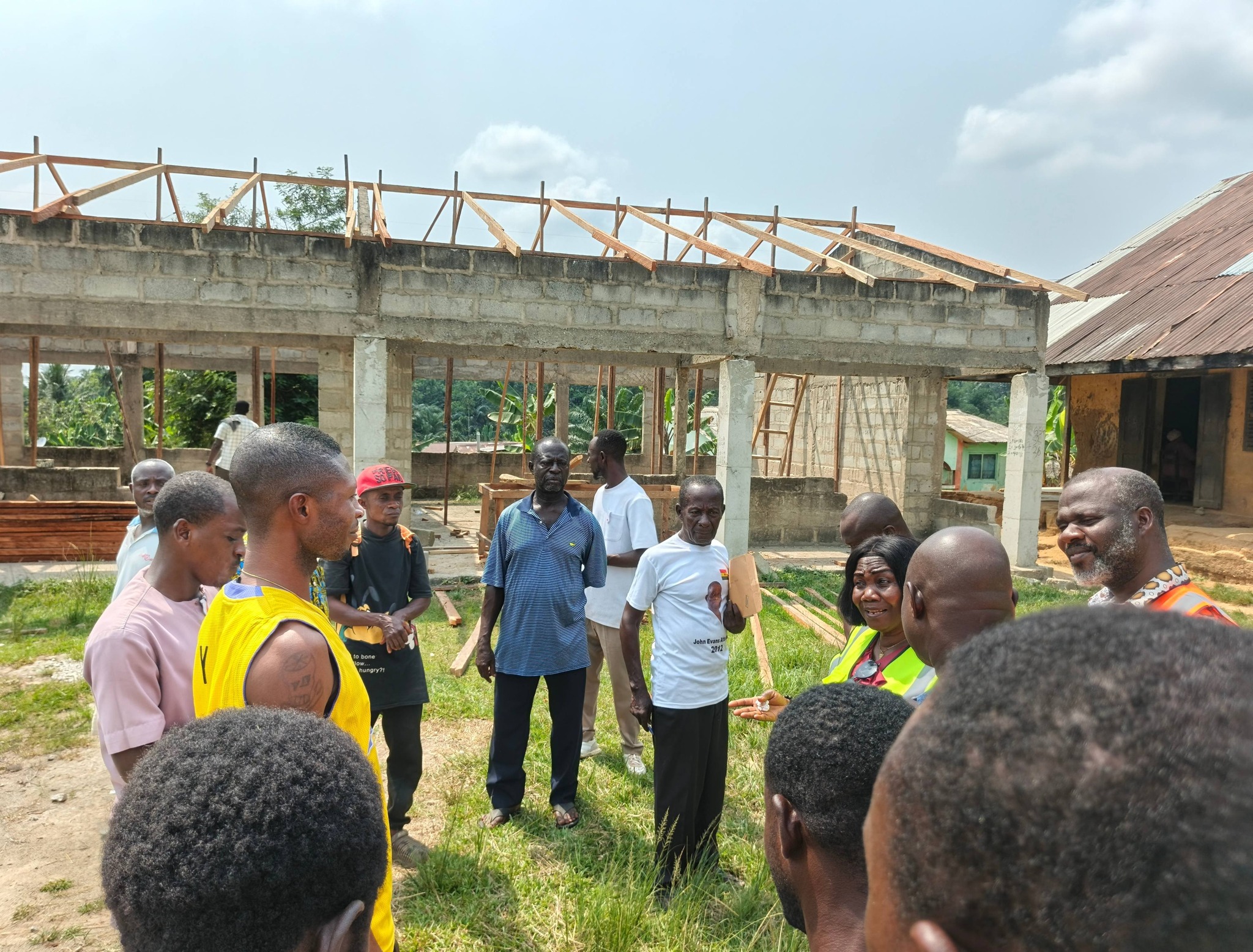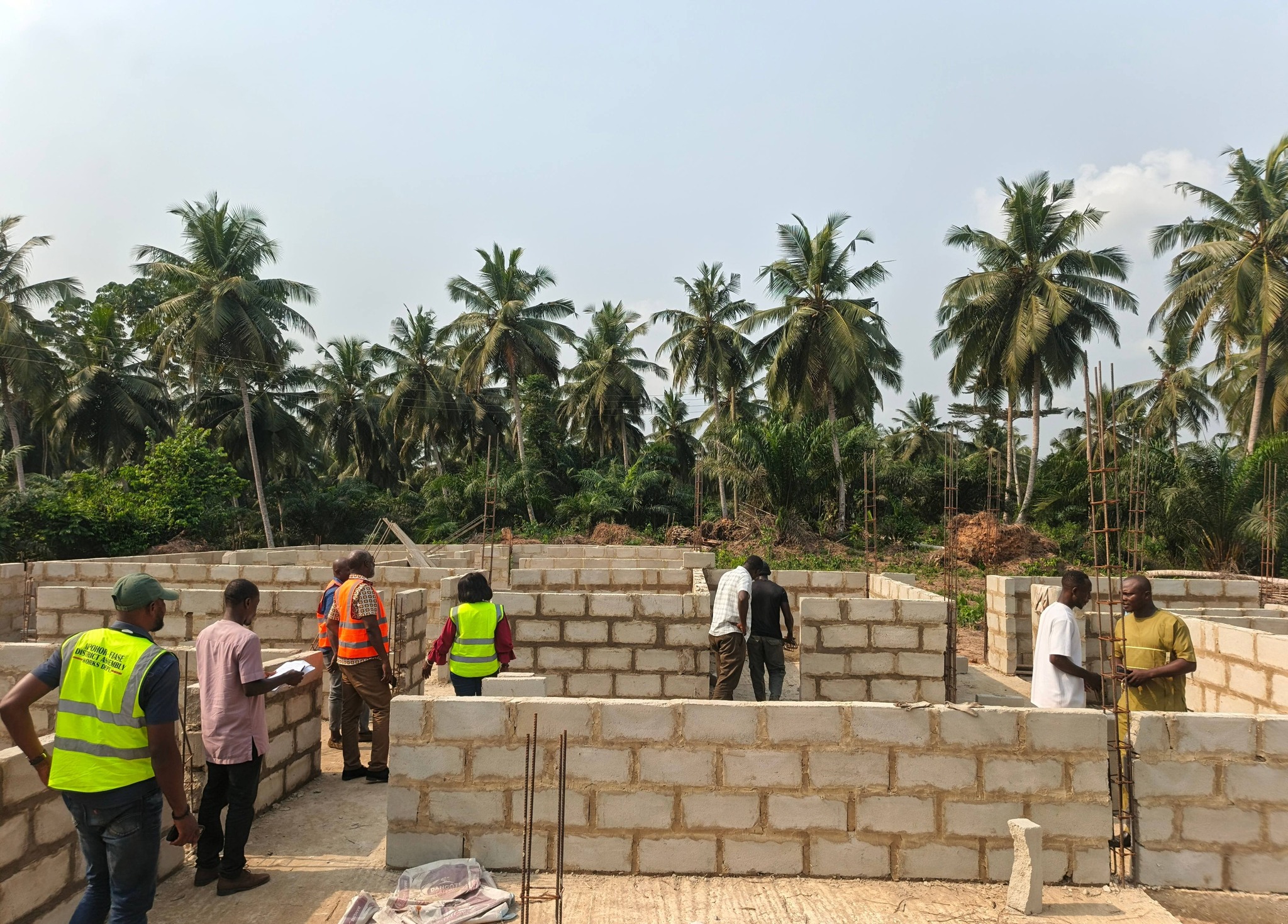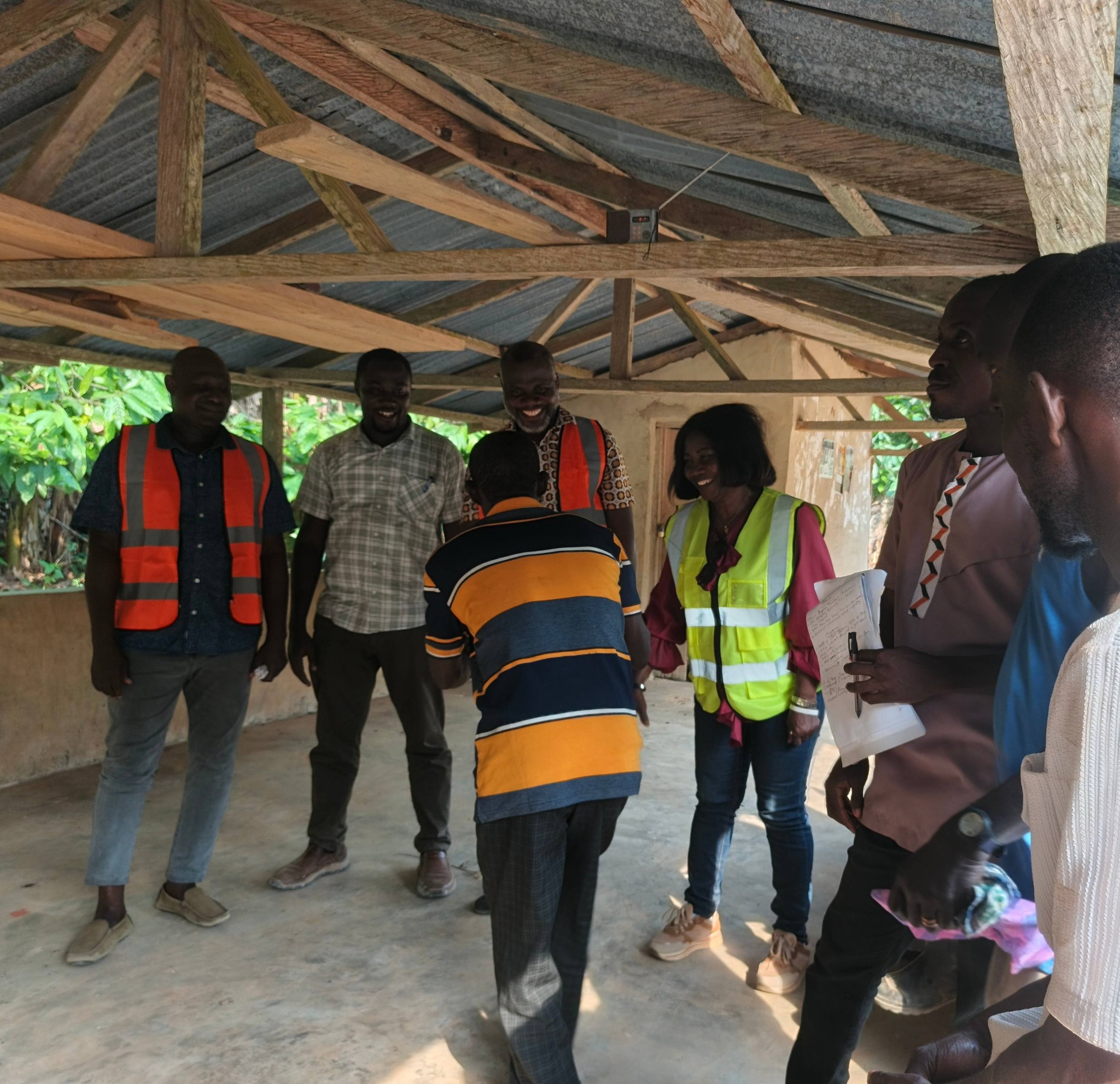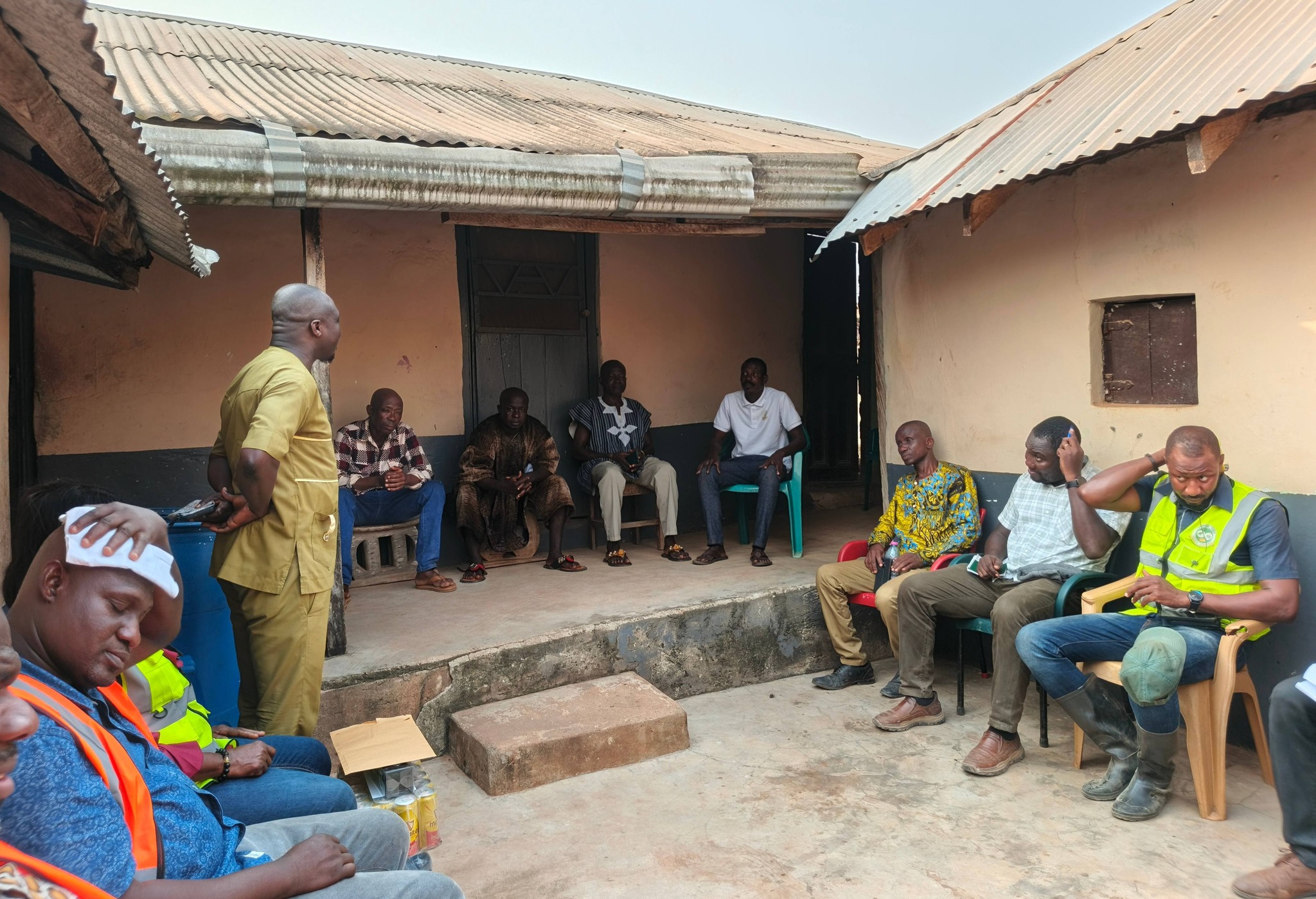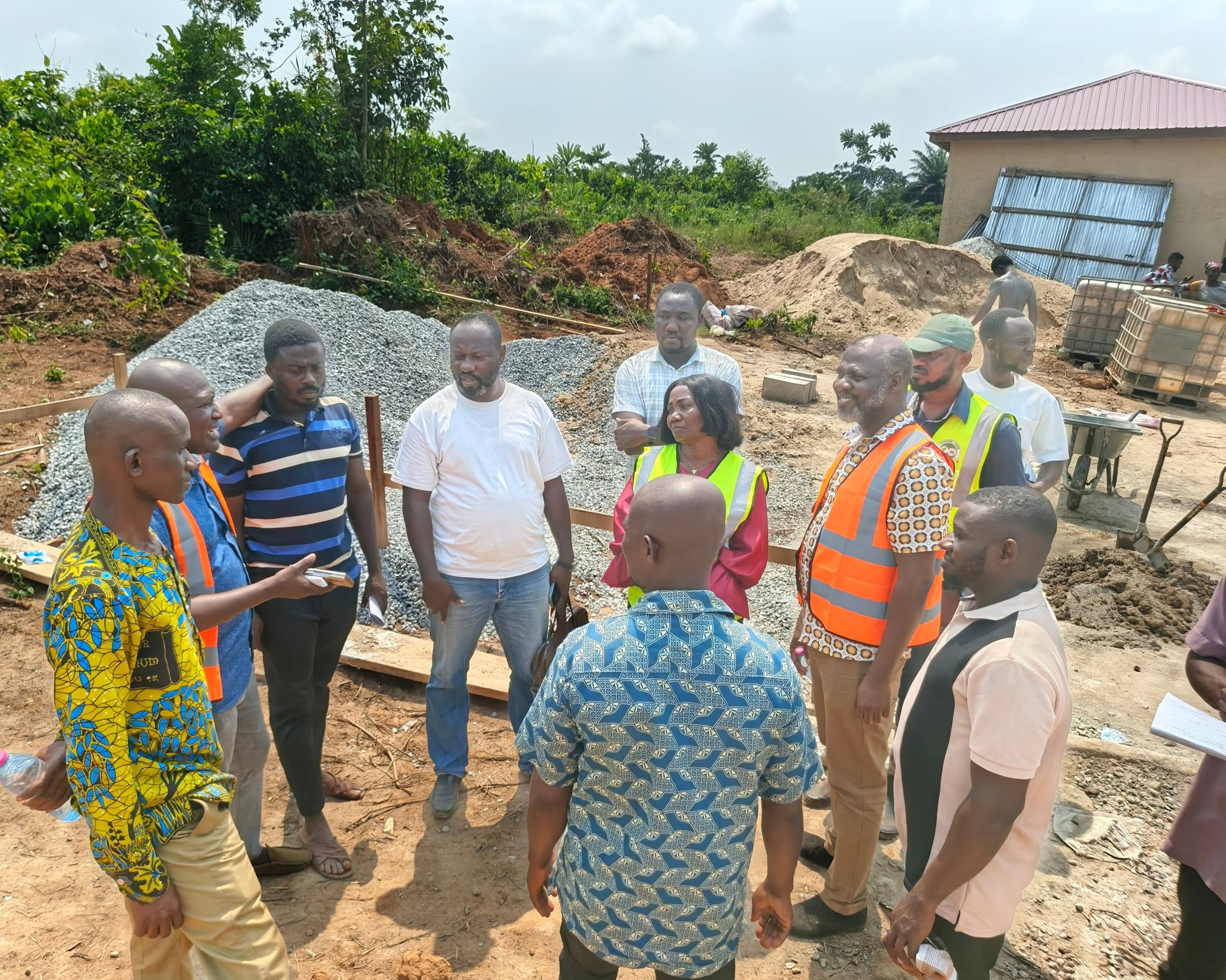
The Mpohor-Fiase District Assembly has commenced a comprehensive monitoring and evaluation exercise across several communities to assess the progress and quality of ongoing and completed development projects within the district. The exercise, which forms part of the Assembly’s routine oversight responsibilities, is aimed at ensuring that projects are executed according to approved specifications, within set timelines, and deliver value for public funds. Monitoring and evaluation remain critical tools in governance, helping to promote accountability, transparency, and effective decision-making while improving service delivery.
The inspection team was led by the District Chief Executive, Sophia Aubyn, accompanied by the Presiding Member, John Donkoh, and a team of technocrats headed by the District Coordinating Director, Mr. Alhassan Sulemana. As part of the exercise, the delegation paid courtesy calls on traditional authorities in all the communities visited. The team engaged chiefs, opinion leaders, and residents to gather first-hand feedback on the impact of projects and strengthen collaboration between the Assembly and local communities.
TheThe monitoring exercise began at Manpong, where the team inspected key projects including the construction of a CHPS compound to improve access to primary healthcare, a mechanized borehole to provide potable water, and a 12-seater water closet toilet facility. Attention was given to the quality of work, adherence to design standards, and progress of construction.
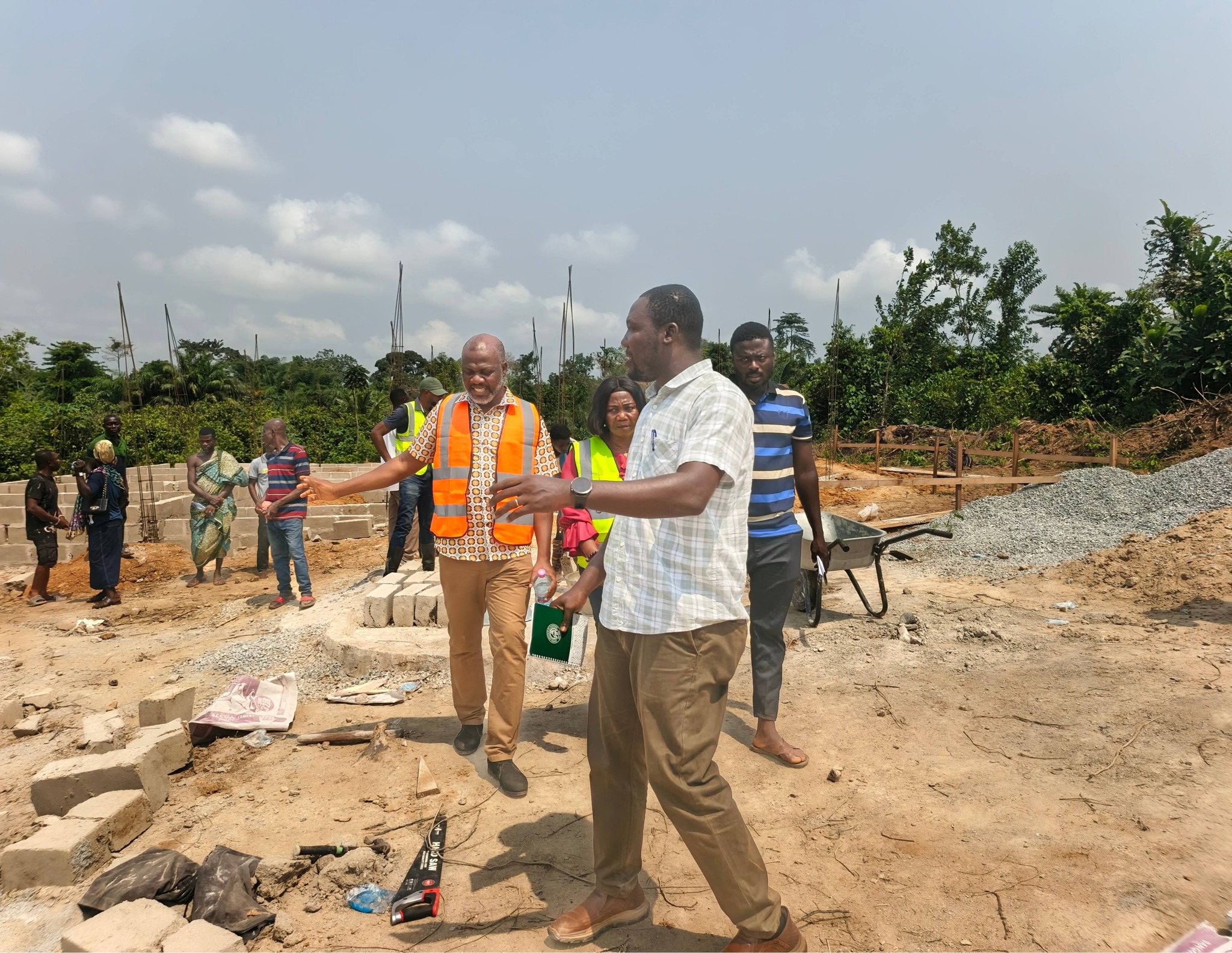
At Adansi, the team assessed two major education projects a three-unit classroom block and a six-unit classroom block expected to enhance teaching and learning by reducing overcrowding and improving the school environment.
The delegation proceeded to Akotrom, where ongoing works on a CHPS compound and a mechanized borehole were inspected. These projects are anticipated to significantly improve healthcare delivery and water accessibility in the community. Further inspections were carried out in Domeabra and Awoyie, focusing on the construction of hand pump boreholes aimed at addressing challenges related to access to safe drinking water. These interventions are expected to improve public health and ease the burden on residents, particularly women and children.
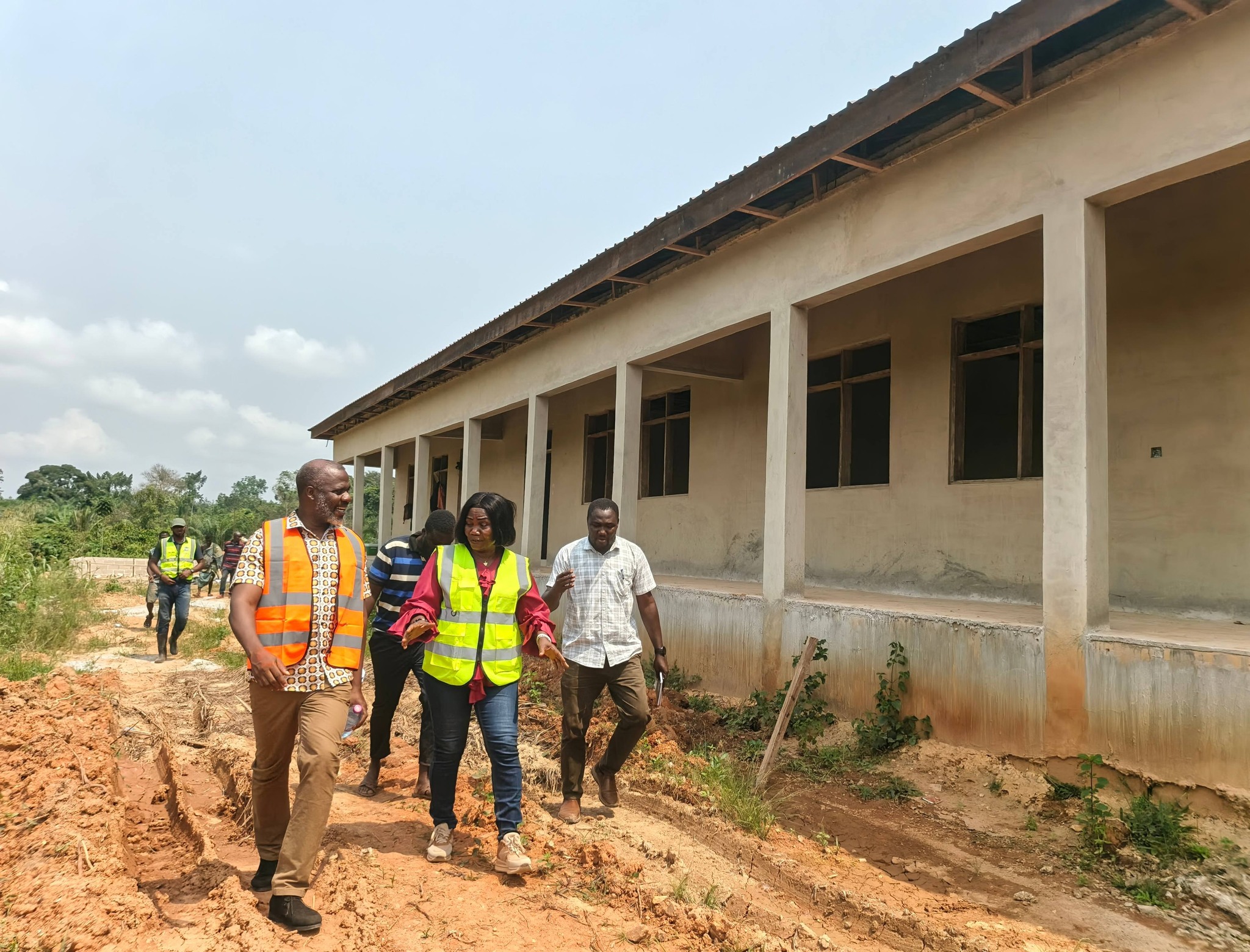
The exercise concluded in Angu, where the team inspected a six-unit classroom block and a 12-seater water closet toilet facility. Discussions with stakeholders emphasized the need for timely completion and strict adherence to quality standards. Throughout the exercise, chiefs and opinion leaders expressed appreciation to the government and the Assembly for prioritising projects that directly impact livelihoods. They also highlighted additional development needs within their communities and pledged continued support and collaboration. The Assembly noted that the monitoring and evaluation exercise reaffirms its commitment to accountable governance, effective project delivery, and inclusive development. It also highlights the importance of regular inspections in ensuring that development initiatives translate into meaningful and lasting benefits for communities across the district.
More photos